¡Nos endieciochamos! Solo por HOY, ENVÍO GRATIS sobre $18.000  Ver más

Enviar a
Santiago, Región Metropolitana
0
  • argentina
  • chile
  • colombia
  • españa
  • méxico
  • perú
  • estados unidos
  • internacional

Selecciona tu país

América

Europa

Resto del mundo

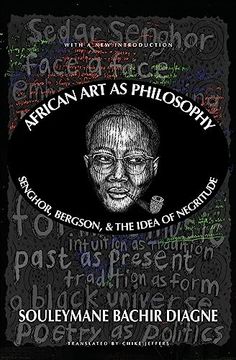
portada African Art as Philosophy: Senghor, Bergson, and the Idea of Negritude (en Inglés)
Formato
Libro Físico
Traducido por
Idioma
Inglés
N° páginas
208
Encuadernación
Tapa Blanda
Dimensiones
20.1x13.2x1.5 cm
Peso
0.23 kg.
ISBN13
9781635423211

African Art as Philosophy: Senghor, Bergson, and the Idea of Negritude (en Inglés)

Souleymane Bachir Diagne (Autor) · Chike Jeffers (Traducido por) · Other Press (NY) · Tapa Blanda

African Art as Philosophy: Senghor, Bergson, and the Idea of Negritude (en Inglés) - Diagne, Souleymane Bachir ; Jeffers, Chike

Libro Nuevo Importado
Envío: 13 a 21 días háb.
$ 43.560$ 26.140
-40%
Costos de importación incluídos en el precio ✅
Libro Nuevo

Quedan 20 unidades

$ 26.140
Llega entre el 08 Oct y el 21 Oct a Santiago, Región Metropolitana. Seleccionar ubicación

Reseña del libro "African Art as Philosophy: Senghor, Bergson, and the Idea of Negritude (en Inglés)"

This critically acclaimed study offers a distinct, incisive look at how Senegalese philosopher Senghor sees in African art the most acute expression of Bergson's philosophy. Léopold Sédar Senghor (1906-2001) was a Senegalese poet and philosopher who in 1960 also became the first president of the Republic of Senegal. In African Art as Philosophy, Souleymane Bachir Diagne uses a unique approach to reading Senghor's influential works, taking as the starting point for his analysis Henri Bergson's idea that in order to understand philosophers, one must find the initial intuition from which every aspect of their work develops. In the case of Senghor, Diagne argues that his primordial intuition is that African art is a philosophy. To further this point, Diagne looks at what Senghor called the "1889 Revolution" (the year Bergson's Time and Free Will was published), as well as the influential writers and publications of that period--specifically, Nietzsche and Rimbaud. The 1889 Revolution, Senghor claims, is what led him to the understanding of the "Vitalism" at the core of African religions and beliefs that found expression in the arts.

Opiniones del libro

Preguntas frecuentes sobre el libro

Todos los libros de nuestro catálogo son Originales.
El libro está escrito en Inglés.
La encuadernación de esta edición es Tapa Blanda.

Preguntas y respuestas sobre el libro

¿Tienes una pregunta sobre el libro? Inicia sesión para poder agregar tu propia pregunta.

Opiniones sobre Buscalibre

Ver más opiniones de clientes