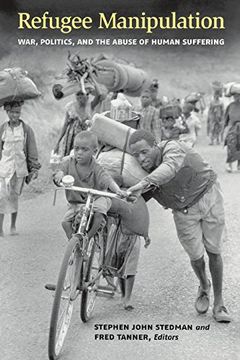
Refugee Manipulation: War, Politics, and the Abuse of Human Suffering (en Inglés)
Reseña del libro "Refugee Manipulation: War, Politics, and the Abuse of Human Suffering (en Inglés)"
Since World War II, refugee organizations have faced a recurrent challenge: the manipulation of refugees by warring parties to further their own aims. Some armies in civil wars, facing military defeat, use refugees as assets to establish the international legitimacy of their cause, treat refugee camps as sanctuaries and recruitment pools, and limit access to refugees to ensure that they will not repatriate. Focusing on the geopolitical security environment surrounding militarized camps and the response of humanitarian agencies, the contributors to this volume examine the ways armed groups manipulate refugees and how and why international actors assist their manipulation. They then offer suggestions for reducing the ability of such groups to use the suffering of refugees to their own advantage. The contributors examine three cases: Cambodian refugees along the Thai border in the 1970s and 1980s, Afghan refugees in Pakistan in the 1980s and 1990s, and Rwandan refugees in Eastern Zaire from 1994–96. They argue that refugee manipulation occurs because warring parties gain resources in their fight for power and other actors, often the host government and regional and major powers encourage and support it. Manipulation is allowed to occur because the international refugee regime and major states have not identified a consistent approach to stopping it. In the post-Cold War era the United Nations and its members have chosen to treat the issue as a humanitarian problem instead of a security problem. As the contributors make clear, however, manipulation of refugees has important ramifications for international security, turning some civil wars into larger protracted regional wars. They argue that the geopolitics of refugee manipulation leads to sanguine conclusions about stopping it. Solutions must change the moral, political, and strategic calculations of states that are implicated in the manipulation. As long as the problem is not deemed a security threat, refugee organizations must choose between assistance that prolongs war or walking away from millions who deserve help. Contributors include Howard Adelman (York University), Frederic Grare (Centre des Sciences Humaines, New Delhi), Margaret McGuinness (Paul, Weiss, Rifkind, Wharton, and Garrison), Stephen John Stedman (Stanford University), Fred Tanner (Geneva Centre for Security Policy), and Daniel Unger (Northern Illinois University).