CÓDIGO CHILELEE18 con 18% EXTRA (Por pocas horas y hasta agotar stock de usos)  Ver más

Enviar a
Santiago, Región Metropolitana
0
  • argentina
  • chile
  • colombia
  • españa
  • méxico
  • perú
  • estados unidos
  • internacional

Selecciona tu país

América

Europa

Resto del mundo

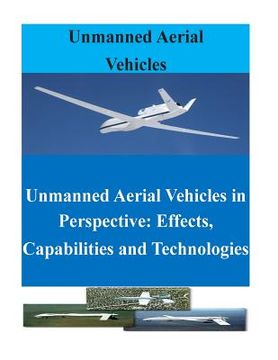
portada Unmanned Aerial Vehicles in Perspective: Effects, Capabilities and Technologies (en Inglés)
Formato
Libro Físico
Editorial
Idioma
Inglés
N° páginas
52
Encuadernación
Tapa Blanda
Dimensiones
27.9x21.6x0.4 cm
Peso
0.15 kg.
ISBN13
9781500631550

Unmanned Aerial Vehicles in Perspective: Effects, Capabilities and Technologies (en Inglés)

United States Air Force Scientific Advis (Autor) · Createspace · Tapa Blanda

Unmanned Aerial Vehicles in Perspective: Effects, Capabilities and Technologies (en Inglés) - United States Air Force Scientific Advis

Libro Nuevo Importado
Envío: 16 a 21 días háb.
$ 54.210$ 32.530
-40%
Costos de importación incluídos en el precio ✅
Libro Nuevo

Quedan 100 unidades

$ 32.530
Llega entre el 13 Oct y el 20 Oct a Santiago, Región Metropolitana. Seleccionar ubicación

Reseña del libro "Unmanned Aerial Vehicles in Perspective: Effects, Capabilities and Technologies (en Inglés)"

Unmanned aerial vehicles (UAVs) are not new to aviation, the military, or the Air Force (AF). The first UAV was developed and operated by Samuel Pierpont Langley, in 1896. During World War I, two separate efforts were conducted to develop UAVs for surface attack. While neither effort was finished in time to see combat, the Sperry Torpedo and Kettering Bug both flew in 1918 as unmanned, automatically controlled bombers. UAV development stalled until World War II, when development was again too late to contribute to the war. The BQM-34 was developed in the 1950s and used operationally as a photoreconnaissance platform. More recently, UAVs have developed along two very distinct paths. Vehicles like Helios and Global Hawk have been engineered for extreme range and altitude, making them large. In contrast, the Black Widow, which has a wingspan of only six inches, was developed to be portable and travel to places where humans cannot go. The UAV is not new, and past experience can be used to chart the course for future development. Today the revolution in technologies such as signal and image processing and sensors can be leveraged to permit UAVs to assume a larger role in Air Force missions.The Air Force is off to a good start as an operational user of UAVs. Ten types of UAVs were used in OPERATION IRAQI FREEDOM. These UAVs performed traditional intelligence, surveillance, and reconnaissance functions as well as a range of more novel missions. One of the UAV's most used and desired attributes was persistence. The marriage of Predator to the Hellfire missile resulted in an unprecedented capability to hold targets at risk, with a level of endurance that made it difficult for the adversary to hide. Special Forces used portable UAVs to scan their areas of operations, enabling them to achieve tactical surprise.

Opiniones del libro

Preguntas frecuentes sobre el libro

Todos los libros de nuestro catálogo son Originales.
El libro está escrito en Inglés.
La encuadernación de esta edición es Tapa Blanda.

Preguntas y respuestas sobre el libro

¿Tienes una pregunta sobre el libro? Inicia sesión para poder agregar tu propia pregunta.

Opiniones sobre Buscalibre

Ver más opiniones de clientes